Securing residential properties against endemic insect and rodent populations requires systematic structural defense across Los Angeles County. ApexShield Pest Control delivers precision pest control services in Los Angeles, combining technical crawlspace diagnostics, botanical perimeter barriers, and physical exclusion retrofits.
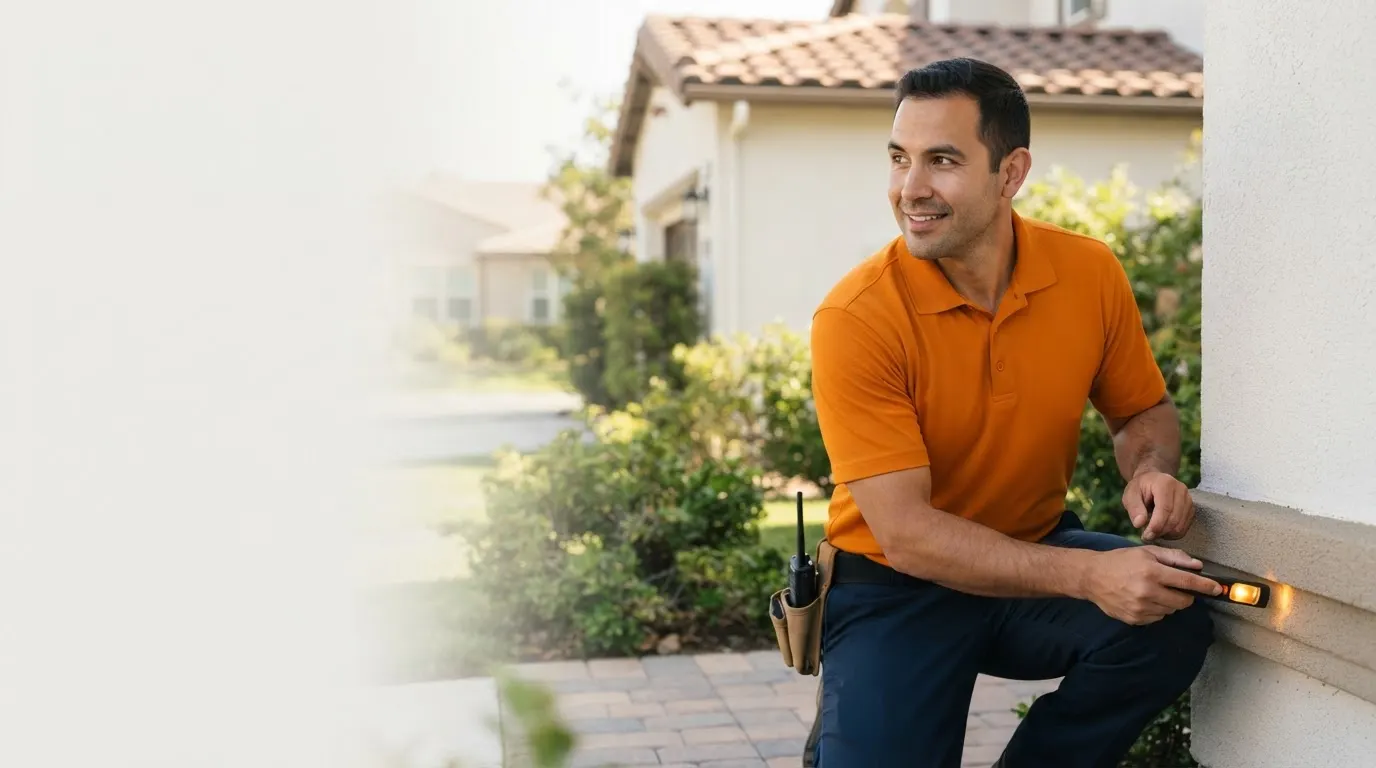
Pest control services in Los Angeles is a technical structural defense and eradication discipline that identifies biological vectors, eliminates target colonies, and physically seals residential architecture against re-infestation.
Every service reflects the same meticulous attention to detail, whether it's a single job or a larger pest control services project across Los Angeles.
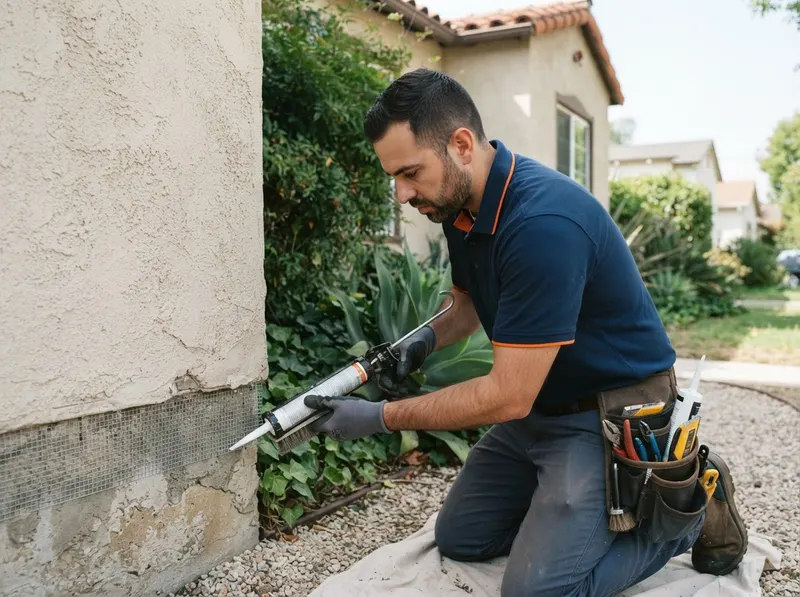
Rodent exclusion is an architectural fortification service that seals entry penetrations across foundation weep screeds, attic dormers, utility pipe conduits, and crawlspace vents. ApexShield Pest Control installs heavy-gauge 1/4-inch 19-gauge hot-dipped galvanized steel hardware cloth secured with masonry fasteners and elastomeric structural caulking. Technicians map roof-to-foundation runways, identifying gnaw marks, grease rub-marks, and subfloor burrowing networks. Mechanical trapping protocols deploy non-chemical wooden or composite snap-traps inside tamper-resistant security boxes positioned along runways within attic voids and sub-floor areas, eliminating non-target hazards under strict adherence to the Centers for Disease Control Rodent Exclusion standards to eliminate the spread of hantavirus, leptospirosis, and murine typhus.
Get a quote →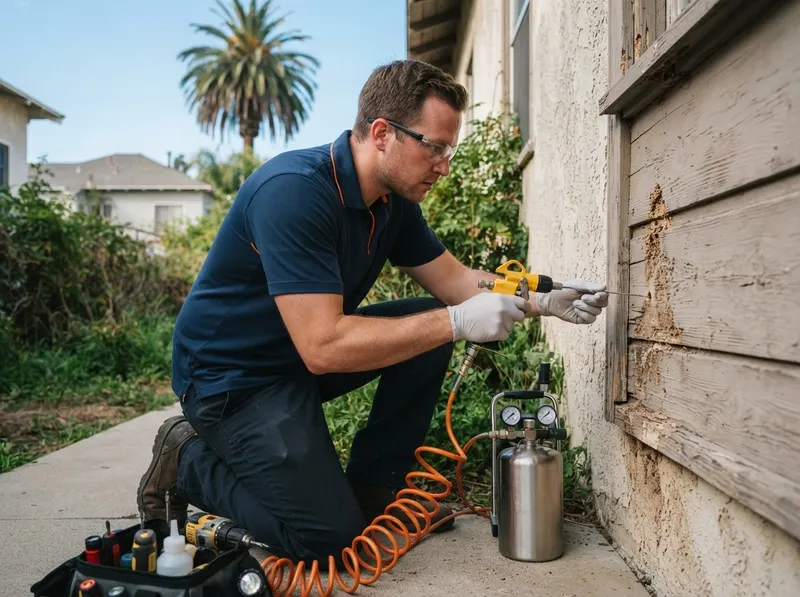
Drywood termite localized remediation isolates and eliminates active Incisitermes minor colonies within specific dimensional wood framing without vacating the structure. Technicians use precision acoustic amplification, optical fiber borescopes, and electronic moisture meters to map internal wood galleries along exposed ceiling beams, door jambs, and rafter tails. Small 1/8-inch access holes are systematically drilled into the center of kickout channels and frass galleries to allow direct high-pressure injection of expanding non-repellent termiticide foams and localized disodium octaborate tetrahydrate (DOT) solutions. The chemical expands 30-to-1 inside the gallery voids, coating the insects and penetrating deep into the cellular structure of the timber to provide structural protection against re-infestation.
Get a quote →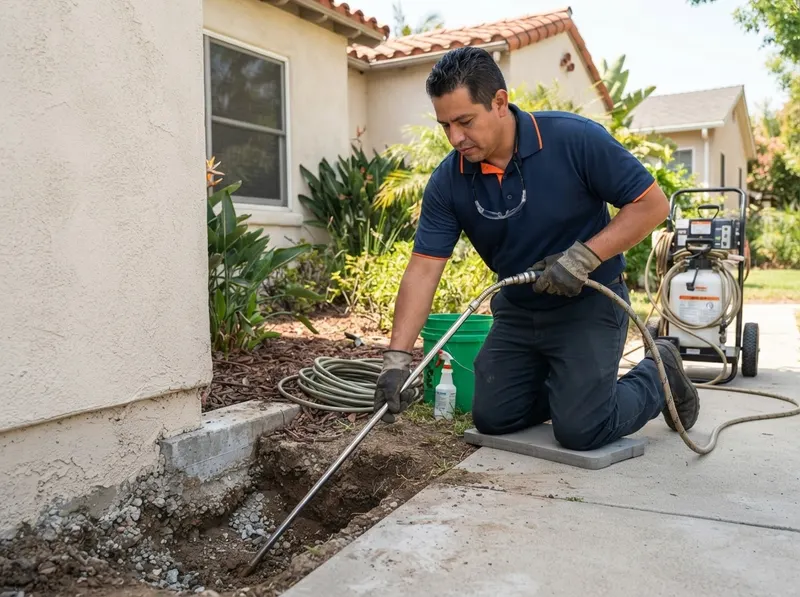
Subterranean termite defense creates an unbroken liquid insecticide zone around the complete structural perimeter to neutralize foraging Reticulitermes hesperus colonies ascending from subterranean nests. Technicians trench continuous 6-inch-wide by 6-inch-deep soil channels immediately adjacent to exterior continuous concrete stem walls and sub-slab foundations. Technicians apply non-repellent liquid termiticides at a standard saturation rate of 4 gallons per 10 linear feet per foot of depth, compliant with California Department of Pesticide Regulation specifications. Where concrete flatwork, carports, or masonry patios abut the foundation wall, technicians utilize rotary hammer drills to insert 1/2-inch precision holes spaced 12 inches apart, low-pressure injecting termiticide directly beneath the slab before sealing each void flush with hydraulic cement.
Get a quote →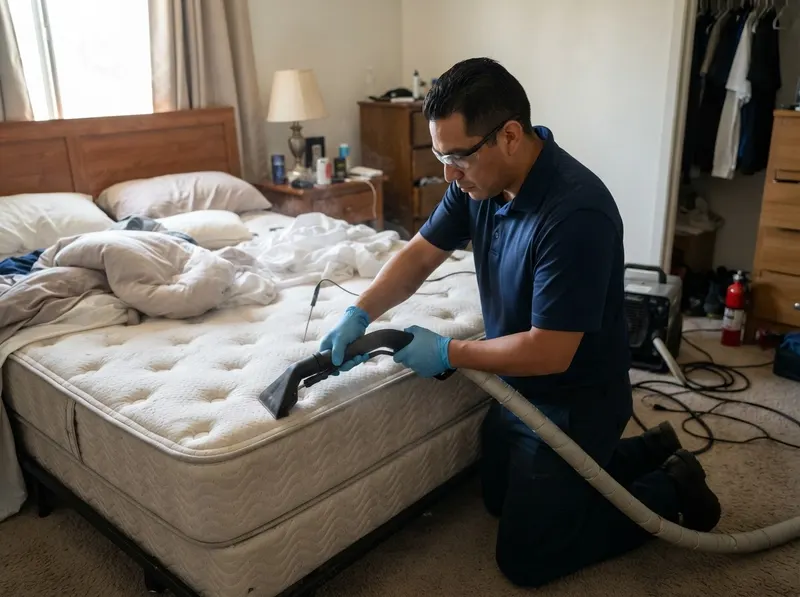
Thermal bed bug eradication leverages convective high-output electric and indirect-fired industrial heaters to treat infested interior environments without relying entirely on residual chemical pesticides. ApexShield Pest Control positions industrial air movers to circulate superheated air evenly across the treatment envelope, raising internal structural temperatures to between 122 and 135 degrees Fahrenheit. Wireless temperature sensors placed inside mattress seams, wall voids, and deep upholstery track heat absorption to ensure that lethal thermal limits are sustained continuously for at least three hours. This thermal saturation destroys all developmental stages of Cimex lectularius, including desiccation-resistant eggs, nymphs, and adults. Following the cool-down period, technicians inject food-grade amorphous silica gel desiccant dust into wall voids and switch plates to establish a physical barrier against prospective re-introduction.
Get a quote →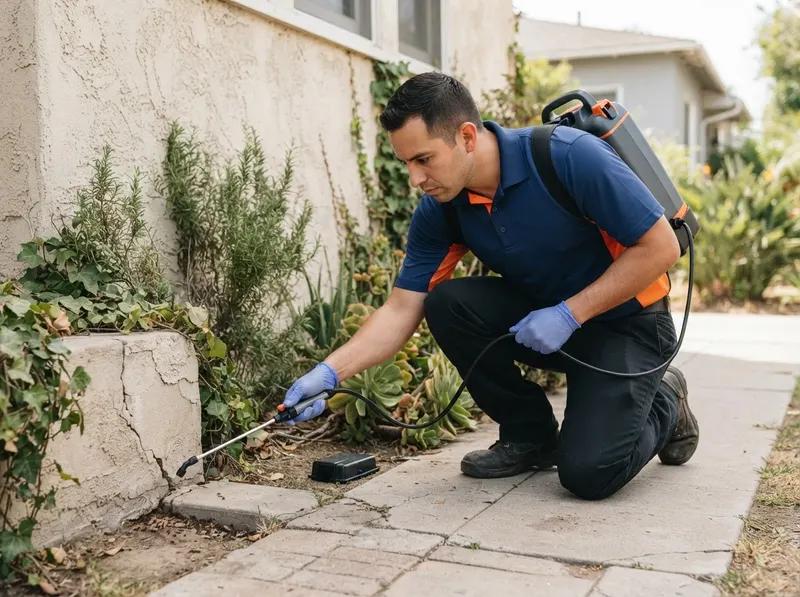
Argentine ant suppression dismantles the subterranean multi-queen supercolonies that dominate Southern California soils. Technicians identify active foraging trails across perimeter irrigation lines, expansion joints, and landscape edging, applying non-repellent micro-encapsulated liquid suspensions and granular bait formulations. Because the foraging ants cannot detect the chemical, they traverse treated zones without triggering an alarm response, picking up active ingredients on their cuticles. Through social trophallaxis and mutual grooming, the active compound is systematically transferred deep into subterranean chambers, reaching non-foraging reproductive queens and brood. This slow-acting biological strategy collapses the colonial reproductive network over a 14-to-21-day window, resolving the root source of indoor trailing without triggering colony budding.
Get a quote →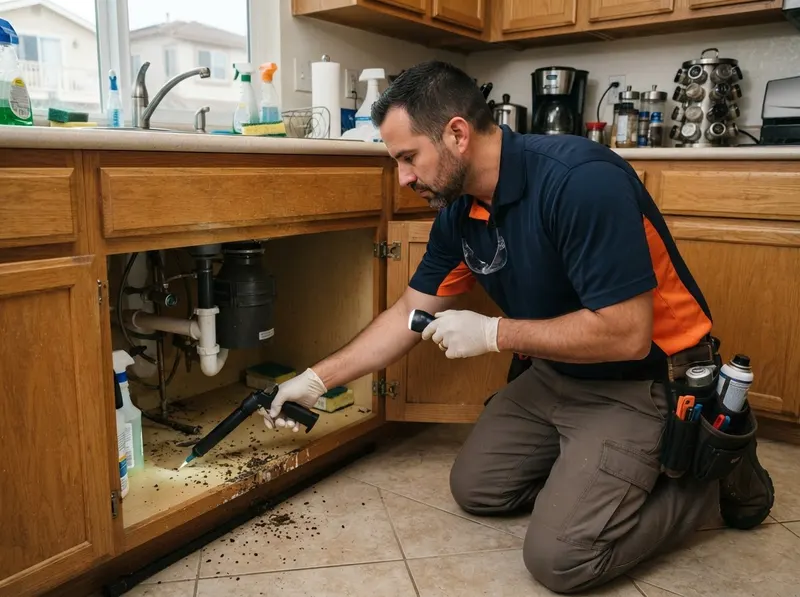
Cockroach bioremediation neutralizes persistent infestations of German cockroaches (Blattella germanica) and American cockroaches (Periplaneta americana) within interior residential kitchens, multi-family plumbing walls, and crawlspace utility penetrations. Technicians execute vacuum clean-outs utilizing certified HEPA-filtered equipment to mechanically remove live adults, nymphs, and allergen-laden ootheca egg cases from under-counter recesses and motor housings. Technicians apply specialized insect growth regulators (IGRs) like hydroprene to halt juvenile molting cycles, combined with matrix gel baits placed in minute, targeted dots inside unexposed structural joints. In damp sub-slab crawlspaces and sewer access chases, technicians apply botanical dust formulations to dry harborage zones, maintaining alignment with OSHA Occupational Safety and Health Standards for indoor environment handling.
Get a quote →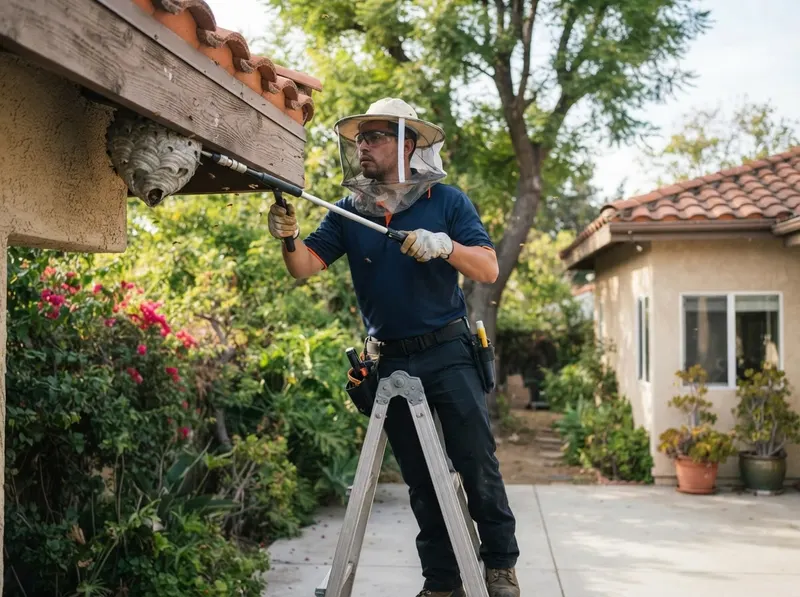
Stinging insect management removes aggressive paper wasps (Polistes dominula), yellowjackets (Vespula pensylvanica), and feral honeybee swarms nesting on or within residential building envelopes. Technicians wear specialized protective bee suits while utilizing extending chemical-injection wands and pneumatic micro-dusters to inject rapid-knockdown botanical sprays directly into eave pockets, Spanish tile ridge caps, and irrigation meter boxes. Once the nest is neutralized, technicians perform complete physical extraction of the comb and brood to eliminate secondary pest infestations from carpet beetles and wax moths. For in-wall honeybee extractions, technicians remove exterior siding, extract the honey storage cache, deodorize the structural cavity with enzymatic cleansers, and install physical wire screening over the exterior void to prevent returning scout bees from re-colonizing the space.
Get a quote →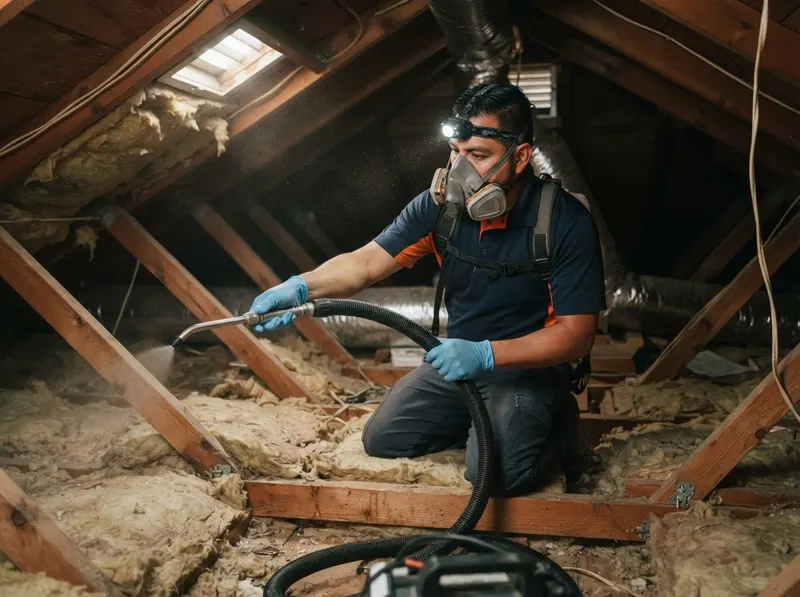
Attic decontamination restores clean, sanitary environmental conditions within residential roof cavities compromised by heavy rodent infestations or raccoons. ApexShield Pest Control deploys continuous-negative-pressure commercial HEPA vacuums stationed outside the structure, routing 10-inch heavy-duty ducting through access hatches to extract biological waste, urine-soaked cellulose, and damaged fiberglass insulation batting. Following bulk debris removal, technicians mechanically wire-brush framing faces to clear organic matter and apply an aerosolized broad-spectrum virucide, bactericide, and odor-neutralizing enzyme wash using thermal fogging equipment. This process neutralizes airborne pathogens, zoonotic bacteria, and lingering rodent pheromone trails before new, thermal-efficient insulation is blown in to return the attic to pristine condition.
Get a quote →You get a firm, itemized quote for your pest control services before any work begins, no surprises, no pressure.
Careful prep, tidy work, and a full cleanup when we are done. We treat your home and belongings like our own.
The same trusted, background-checked team from the first call to the final check.
Selecting appropriate intervention protocols depends directly on the specific pest species, building foundation style, and the spatial distribution of the infestation throughout the property. When drywood termite activity (Incisitermes minor) is localized to an accessible structural framing member, fascia board, or subfloor joist, targeted precision drill-and-injection using non-repellent chemistries provides an effective solution without family displacement or chemical off-gassing. Conversely, if termite frass and interior acoustic micro-sensor testing indicate widespread colony dispersion across completely inaccessible attic trusses and multi-layer wall framing, full structural tent fumigation under statutory supervision by the California Structural Pest Control Board represents the definitive protocol. The structural trade-off centers on cost and convenience: targeted micro-injections preserve interior living access and avoid hazardous gas, yet whole-structure fumigation addresses concealed colonies hidden behind dry-packed lathe and plaster walls where localized equipment cannot penetrate.
For rodent management involving Norway rats (Rattus norvegicus) or roof rats (Rattus rattus), choosing comprehensive physical exclusion paired with mechanical interior snap-trapping guarantees permanent vector defense. If property managers select recurring poison-bait station maintenance alone without physical sealing, the operational trade-off is catastrophic: rodents consistently bypass exterior bait stations to nest within warm ceiling insulation, creating severe secondary odor hazards, biohazardous ectoparasite migrations, and fatal toxic risks to native predatory raptors in nearby urban hillsides. Structural exclusion permanently removes the vector by physically blocking ingress paths larger than 0.25 inches.
Addressing pervasive Argentine ants (Linepithema humile) requires deploying undetectable, slow-acting liquid baits and non-repellent transfer insecticides such as fipronil along structural foundation perimeters. When property owners attempt eradication using off-the-shelf pyrethroid aerosol sprays, the catastrophic trade-off is colony budding: the repellent chemical panics the foraging workers, triggering the supercolony to instantly divide its multiple reproductive queens into independent satellite nests dispersed throughout interior drywall cavities, multiplying the localized problem tenfold. Aligning the treatment approach directly with the biological mechanism of the target pest ensures long-term exclusion while preventing needless chemical over-application within residential spaces. For active infestations, residents can call (424) 540-2742 or text a photo of physical damage, droppings, or insect specimens to our diagnostic technical team for immediate identification.
Every project gets a firm, written price after a free on-site visit. Ranges below for orientation.
Tell us about your pest control services job and we'll send a clear, written quote, usually the same day. Or just call and talk to a real Los Angeles pro.
(424) 540-2742
Los Angeles County presents distinct environmental, geological, and architectural conditions that dictate specialized pest management protocols. The region features continuous structural crawlspace variations, hillside stilt-foundations anchored along steep topography, and complex Spanish tile roofing profiles commonly found across Silver Lake, Echo Park, and Los Feliz. Properties flanking open municipal reserves like Griffith Park, Elysian Park, and the Sepulveda Basin Recreation Area interface directly with diverse wildlife corridors, exposing structural rooflines to continuous pressure from aggressive roof rats (Rattus rattus) that traverse overhead utility lines and overhanging canopies of bougainvillea and California palm trees. In coastal microclimates including Venice and Santa Monica, high ambient humidity, marine layer condensation, and sandy loam soils create ideal conditions for subterranean termite (Reticulitermes hesperus) colonies, which aggressively mine foundation mudsills and untreated framing timbers. Conversely, interior communities across the San Fernando Valley, including Sherman Oaks, Encino, and Woodland Hills, experience persistent summer heatwaves routinely exceeding 100 degrees Fahrenheit. This intense dry heat causes surrounding topsoils to shrink and crack, driving multi-queen Argentine ant supercolonies indoors in search of moisture through hairline stucco weep screed fractures, slab floor expansion joints, and under-slab plumbing utility entries. Architectural styling across Los Angeles presents specific access challenges: historic 1920s Spanish Revival residences utilize un-mortared barrel roof tiles that provide immediate harborage for stinging paper wasps and bats, while Mid-Century Modern slab-on-grade foundations in Brentwood feature floor-to-ceiling perimeter glazing that requires careful non-staining botanical formulations. Furthermore, municipal pest strategies must operate within local environmental constraints, including state regulations that strictly govern rodenticide bait applications to shield native predatory bobcats, mountain lions, and red-tailed hawks residing throughout the Santa Monica Mountains. ApexShield Pest Control customizes every structural perimeter defense, barrier application, and mechanical exclusion design to withstand these regional climatic, ecological, and structural parameters across the Greater Los Angeles basin. Call (424) 540-2742 to speak with an on-site technician about property-specific exclusion points.
Free estimates for Los Angeles & the surrounding area.
For standards, safe disposal, and service guidance on pest control services in Los Angeles, CA, useful references include U.S. EPA, ENERGY STAR, U.S. Dept. of Energy, Consumer.gov, U.S. Census Bureau, and Google Maps. General consumer and small-business resources are available from USA.gov, Better Business Bureau, FTC Consumer Advice, U.S. Small Business Administration, and Ready.gov.
 ApexShield Pest Control